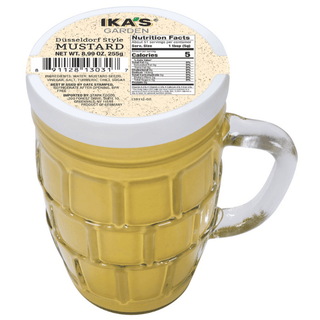
Sweet mustard is most closely associated with Bavaria, where it is considered the correct accompaniment for certain sausages. Unlike sharper mustard styles, sweet mustard is designed to support mild flavors rather than contrast them.
For many Germans, sweet mustard is not optional, it belongs with specific dishes, and using the wrong mustard would feel out of place. People have been sued over mustard disputes in Munich, or at least have attempted to do so.
The Classic Pairing: Weißwurst
The most well-known pairing, found in every beer tent at the Oktoberfest, is Weißwurst, a mild veal and pork sausage traditionally eaten before noon. Sweet mustard is served alongside, not mixed in, and used sparingly.
Good to know: Weißwurst is often eaten without the casing, and the mustard is added bite by bite, never spread all at once.
Other Traditional Uses
Sweet mustard is also commonly served with:
- Leberkäse (Bavarian meat loaf), often in a bread roll known as a semmel
- Mild Bratwurst, especially pan-fried rather than grilled
- Cold sausage plates served with bread
- Leftover sausages eaten cold, where sweetness balances salt
Some Germans also use small amounts of sweet mustard in salad dressings or sauces, particularly in southern regions.
Flavor and Texture
German sweet mustard is smooth or lightly coarse, with sweetness that remains balanced rather than sugary. Heat is subtle, allowing it to complement mild foods without overpowering them.
A Note for First-Timers
If you are new to German mustard, sweet mustard is often the easiest place to start. It highlights how mustard in Germany is used as part of the meal rather than as a dominant flavor. Due to the sweetness is most enjoyable for kids and tourists. People will use a pretzel to scoop up what is left of the mustard after the meal, if any. It's that good!