


Main Course
Traditional Goulash
Prep20 min
Cook150 min
Total170 min
Serves2
SkillEasy
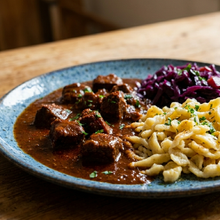
"You don't have to spend all day at the stove to bring authentic German comfort food to your table. In our home, this rich, savory Rindergulasch is the ultimate weekday lifesaver— there is not a lot of prep involved, it's incredibly easy, and my kids absolutely love it. This recipe gives you tender beef in a deeply flavorful, paprika-infused gravy served over golden Spätzle egg noodles, streamlined to be as convenient as possible for a busy evening. Watch my short video to see how I make this traditional classic in a fraction of the time, using the exact pantry ingredients available right here in the shop. Pick up the bundle below and let's make dinner simple tonight!"
Watch how it's made

Free downloads
Get this recipe to keep — the video, ingredient list and written recipe, free of charge.
Download them all hereShop the ingredients
German Gulasch - Cooking Bundle + Free Video Tutorial
$15.96
Or add the ingredients individually
Ingredients
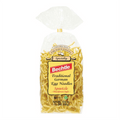
- 1 bag Bechtle Egg Spätzle, Black Forest style
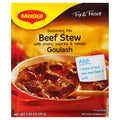
- 1 Maggi Fix Goulash (Beef Stew) Mix
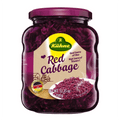
- 1 jar Kühne Red Cabbage (Rotkohl)
- 1 lb beef shank, chuck or neck
- 1.5 cups water
- 1/2 tsp salt
- 1–2 cloves (optional)
- 2–3 bay leaves (optional)
Step by Step Instructions
Task 1: Cut Meat
- Quantity & Cut: Use 1 lb (approx. 500 g) of beef shank.
- Flavor Tip: Use a cut with the bone; debone it but save the bone for its rich marrow and depth of flavor.
- Prep: Cut the meat into 1.5-inch cubes.
- Trimming: Trim away the silver skin, but keep the tendons intact.
Task 2: Sear Meat
- Prep: Pat the meat dry with paper towels to ensure a perfect crust.
- Heat & Fat: Set the stove to high heat and add ghee to the pot.
- Searing: Sear the meat and the bone in batches (to avoid crowding the pan) until golden brown.
- Technique: Wait until the meat releases naturally from the bottom before turning; optionally, add a pinch of salt.
- Deglazing: Pour in 1.5 cups (approx. 375 ml) of water and use a spatula to scrape up the flavorful browned bits (fond) from the bottom.
- Simmering: Reduce the heat, whisk in the seasoning mix, cover the pot, and let it simmer on low heat for 2 hours.
Task 3: Cook Spätzle
- Boil: Bring a pot of water to a boil and add a generous pinch of salt.
- Cooking: Toss in the Spätzle and cook until they are "al dente" (perfectly firm to the bite).
- Draining: Drain the Spätzle immediately in a colander.
- Crucial Step: Do not rinse the Spätzle with water!
- Keeping the starch on the surface helps them retain their texture and allows the sauce to cling to them better.
Task 4: Heat Red Cabbage
- Heat: Pour the red cabbage into a pot and set it over medium heat.
- Aroma (Optional): Add bay leaves and cloves to infuse the cabbage with a deeper, richer flavor.
- Serving: Stir occasionally until thoroughly heated and ready to serve.
Task 5: Plate Up & Guten Appetit!
- Prep: Remove the bone, bay leaves, and cloves before serving—their job is done!
- Plate: Create a bed of Spätzle and ladle the goulash next to or partially over them so the sauce can coat
- the noodles.
- Balance: Place the red cabbage as a separate colorful accent to keep its acidity from mixing too early with
- the gravy.
- Garnish: Sprinkle with freshly chopped parsley for a pop of color and a fresh finish.
- Pro Tip: Use pre-warmed plates to keep the meal hot, as Spätzle can cool down quickly.
Frequently asked questions
Is goulash German or Hungarian?
Goulash originated in Hungary, but Germany has its own much-loved version, Rindergulasch — a thicker beef-and-paprika stew usually served over noodles rather than as a soup. Both are distinct dishes in their own right.
What is the difference between German and Hungarian goulash?
Hungarian gulyás is a thinner, soup-like dish, often with potatoes. German Rindergulasch is a thicker beef stew in a paprika gravy, typically served over Spätzle or with dumplings.
What do you serve with German goulash?
German goulash is classically served over Spätzle egg noodles, but it is also excellent with potato dumplings or a slice of crusty bread to mop up the paprika gravy.
What cut of beef is best for goulash?
Choose a cut with connective tissue that breaks down slowly — beef shank, chuck or neck. Slow simmering turns them tender and gives the gravy its body.

Cook the dish!
Get everything you need for this meal - delivered to you with just one click.

