


Oktoberfest Food: What They Actually Eat at the Wiesn
The 191st Oktoberfest runs 19 September to 4 October 2026. This is the food that fills the tents — and how to put it on your own table.
Oktoberfest food is roast pork, sausage, dumplings and sauerkraut — not pretzels and beer alone. Over sixteen days more than six million people eat their way through the Wiesn, and almost all of it is Bavarian home cooking scaled up to tent size. Below are the dishes that actually appear on those tables, ranked, with everything you need to cook them shipped from our New Jersey warehouse.


It Started With a Wedding
On 12 October 1810, Crown Prince Ludwig of Bavaria married Princess Therese of Saxe-Hildburghausen. The citizens of Munich were invited to celebrate on the fields outside the city gates, and the party ended with a horse race. It went so well they did it again the next year, and the year after that.
The fields were named Theresienwiese — Therese's meadow — after the bride, and Münchners still call the festival d'Wiesn to this day. The horse race is long gone. The beer, the food and the fairground stayed.
It is called Oktoberfest but now runs mostly in September, because the organisers moved it earlier for the warmer weather. In 2026 it opens on 19 September and closes on 4 October — the 191st time it has been held.
1Weisswurst — the Breakfast You Cannot Order After Noon
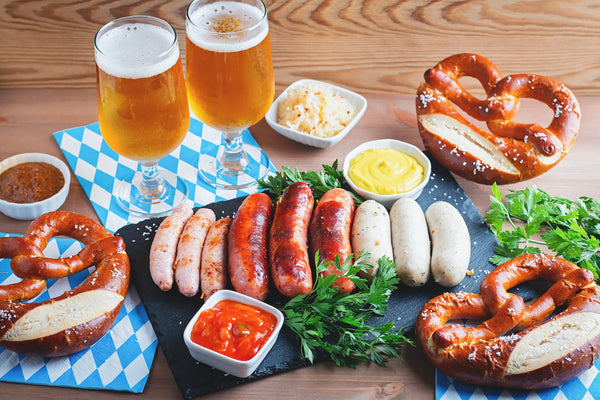
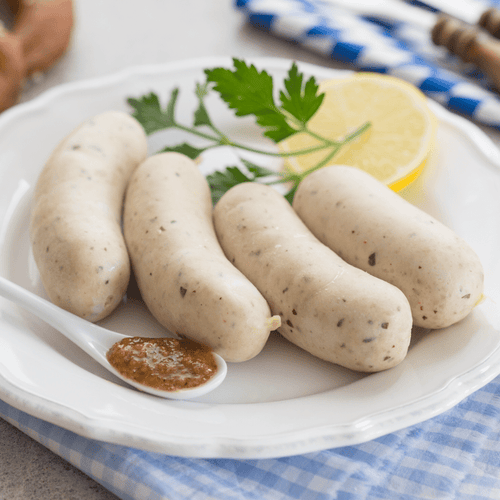
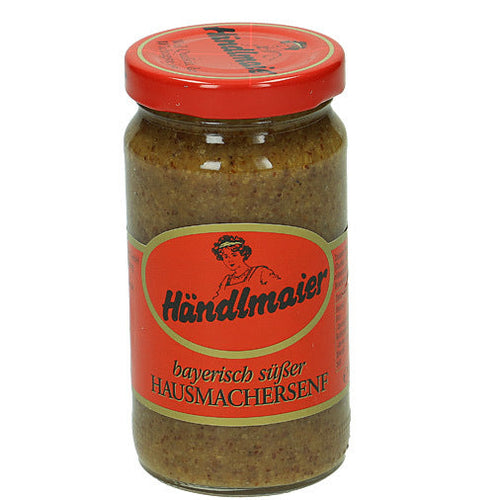
The most Bavarian thing on this list. Weisswurst is a pale veal and pork sausage flavoured with parsley, lemon zest and mace, gently simmered — never grilled, never boiled — and served swimming in its own hot water with sweet Bavarian mustard and a Brezel.
The old rule is that Weisswurst must not hear the midday bell, from the days before refrigeration when it was made fresh each morning. Bavarians still take it half seriously. Slit the casing lengthways and lift the sausage out with a fork; the skin is not eaten.
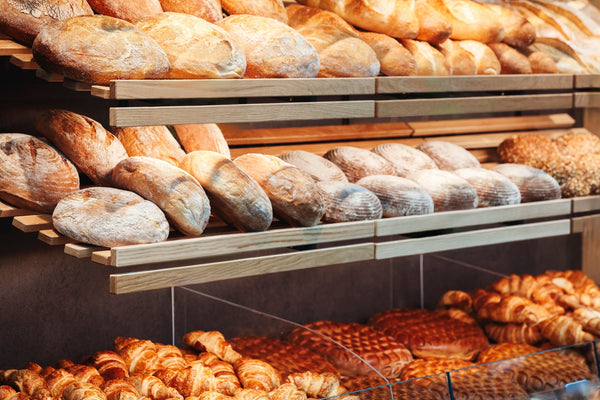
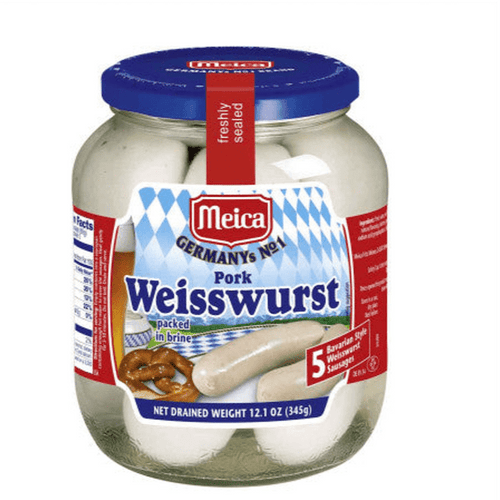
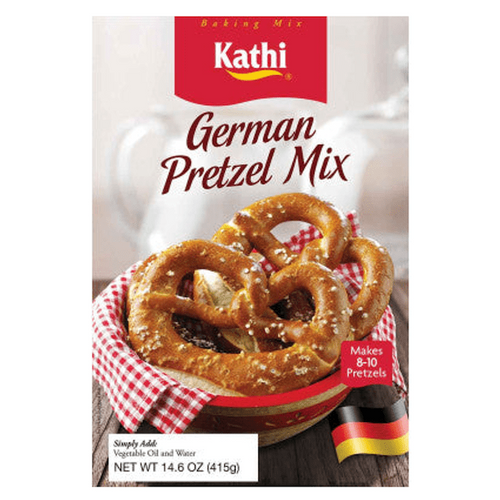
There is also a jarred Meica version if you want it in the cupboard rather than the fridge, and the Kathi pretzel mix if you want to bake the Brezel yourself.
2Schweinebraten and Schweinshaxe — the Roast That Anchors the Table
If one dish defines the tents, it is roast pork. Schweinebraten is a shoulder joint roasted with caraway, garlic and dark beer until the crackling shatters. Schweinshaxe is the whole knuckle, slow-roasted so the skin blisters into glass — the plate everyone photographs.
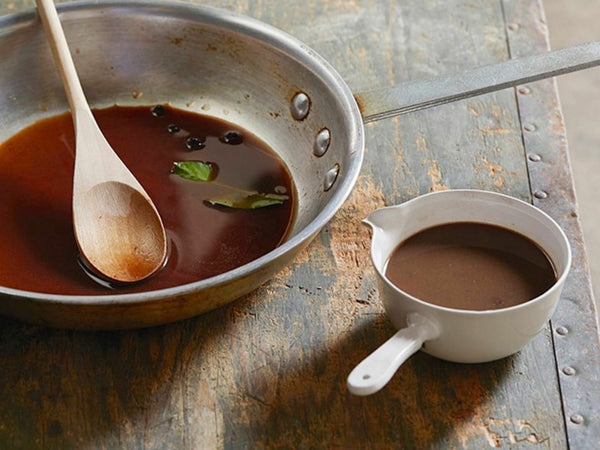
Neither is complicated. What makes it Bavarian is what surrounds it: a dark, glossy gravy poured generously, a potato dumpling to soak it up, and sauerkraut cut through with wine to balance the fat.
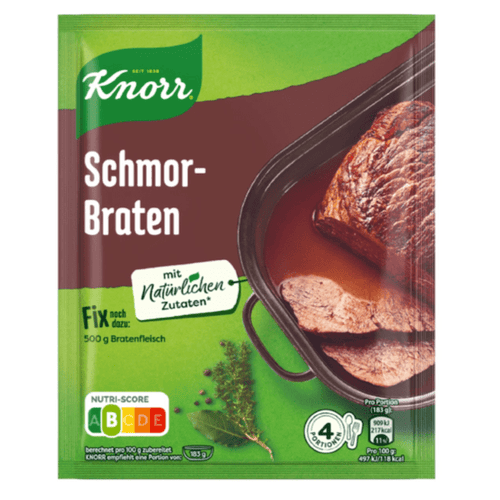
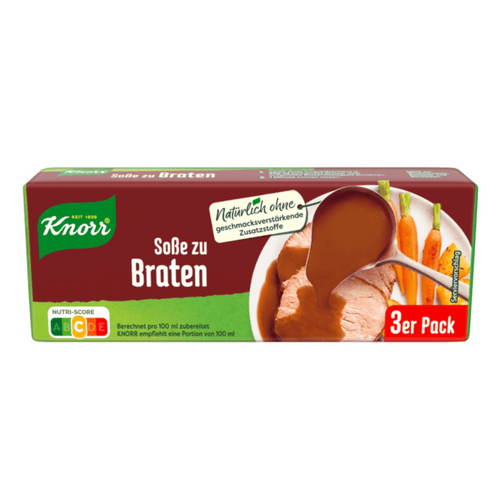
The shortcut most German households actually use is a Knorr Fix Schmorbraten for the roast and Soße zum Braten for the gravy — that is what is in the cupboard at home, not a from-scratch stock.
3Bratwurst and Nürnberger — Six on a Plate, or Three in a Roll
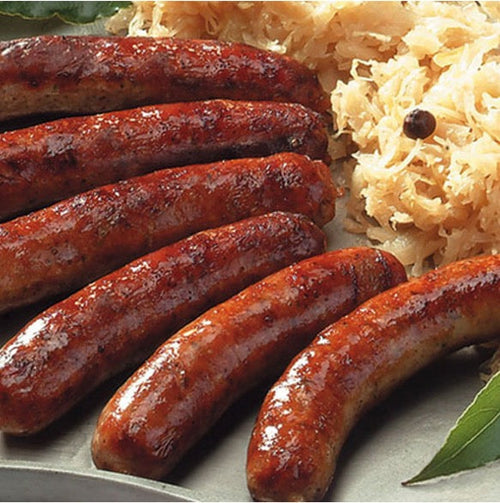
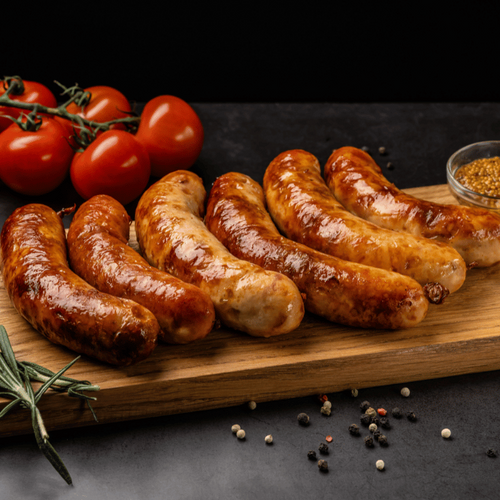
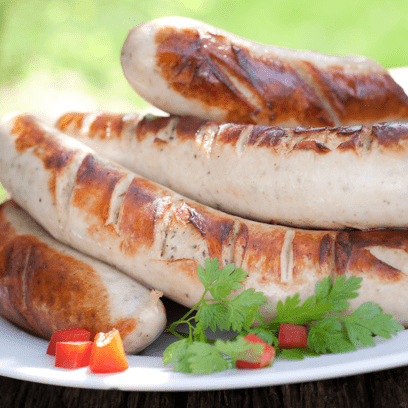
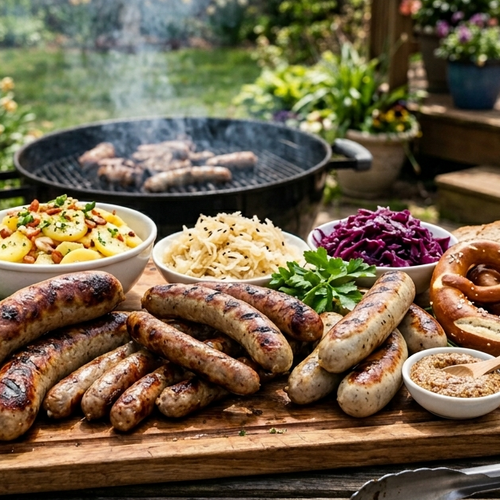
Grilled sausage is the food you eat standing up between tents. Nürnberger are the small ones — barely finger-length, all pork with marjoram, traditionally eaten three at a time in a hard roll and known as Drei im Weckla. Thüringer are longer and seasoned with whole caraway, and a straight German Bratwurst sits in between.
Cook them over medium heat, not high. The casing splits before the middle is done if you rush it. Serve with German mustard and nothing else on the plate.
If you are feeding a table, the Oktoberfest Platter puts all of them in one box.
4Knödel — the Dumpling That Makes It a Meal
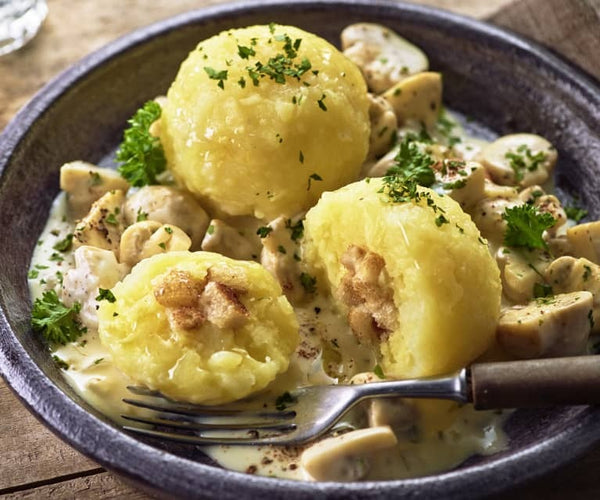
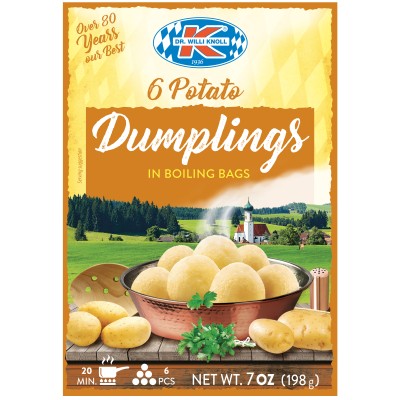
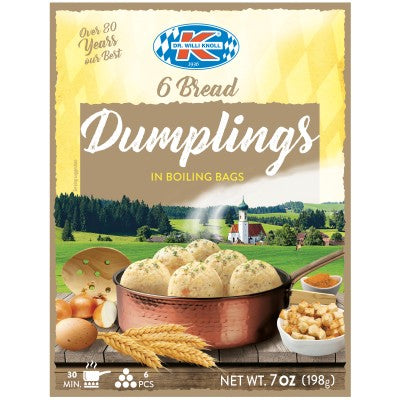
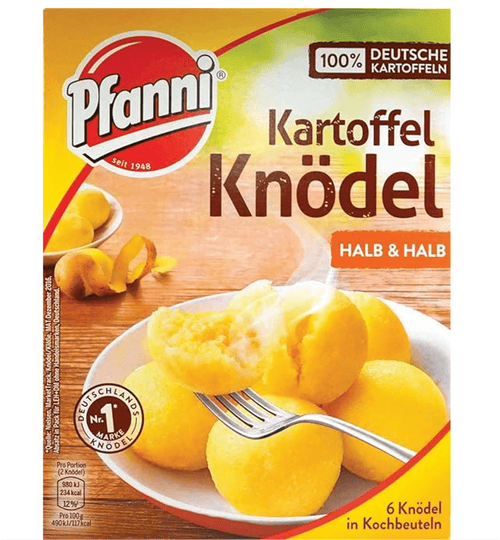
No roast arrives without one. Semmelknödel are made from stale bread rolls, parsley and onion; Kartoffelknödel from potato, and the halb und halb version splits the difference between raw and cooked potato for a lighter texture.
Their whole purpose is gravy. A good dumpling is dense enough to hold together and porous enough to drink. If you want the Bohemian style, sliced rather than round, try Werner's Böhmische Knödel.

5Leberkäse — the Snack Between Tents
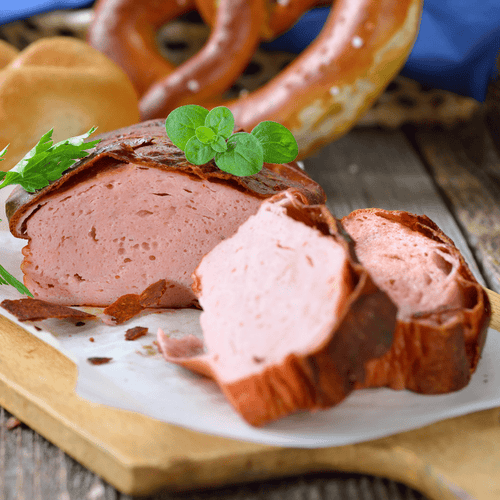
A thick slice of Leberkäse in a crusty roll is what Münchners eat when they need something in their hands and nothing on a plate. It is a smooth baked meat loaf of pork and beef, sliced thick and pan-fried until the edges catch.
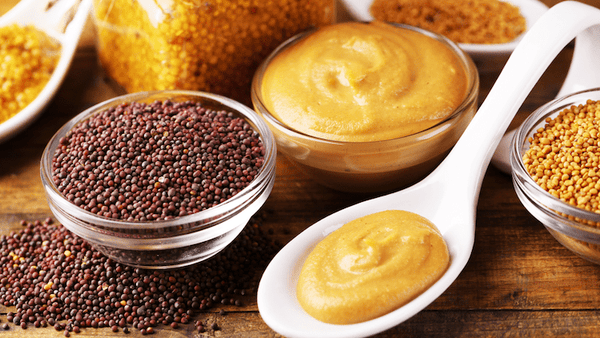
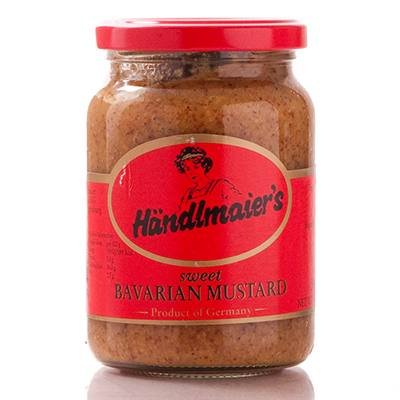
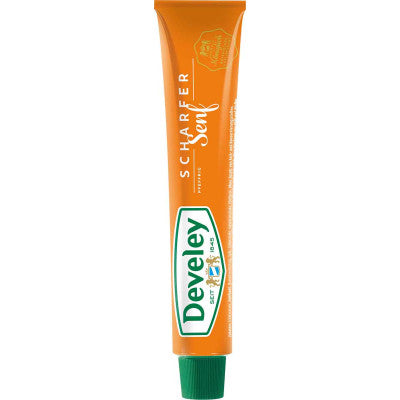
Sweet mustard is the traditional pairing, but plenty of people — including us — prefer it with a medium or hot German mustard, which cuts the richness rather than doubling down on it. Try both and decide.
Despite the name, Bavarian Leberkäse contains no liver whatsoever — which is why several regions call it Fleischkäse instead.
6Wurst mit Sauerkraut — the Everyday Plate
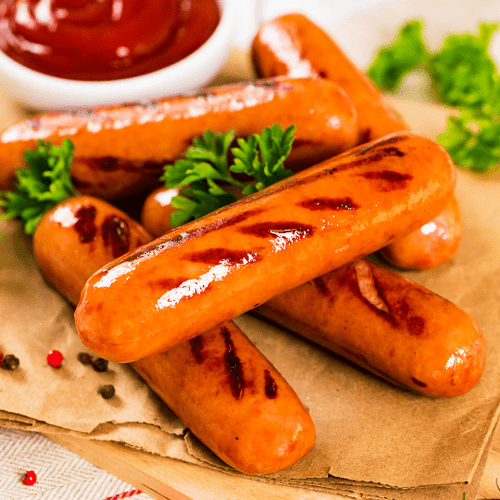
The least photographed and most eaten combination on the Wiesn. A pair of sausages, a mound of sauerkraut, mustard on the side and bread to mop up.
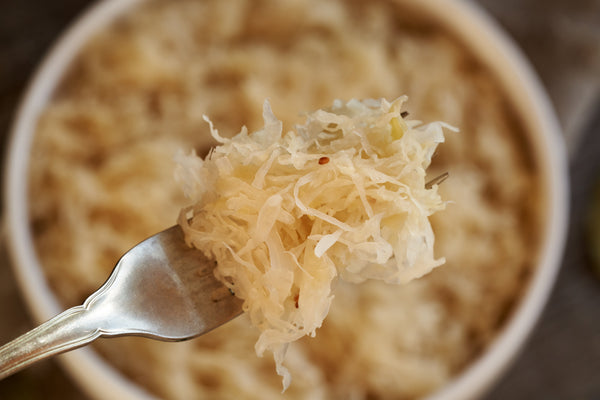
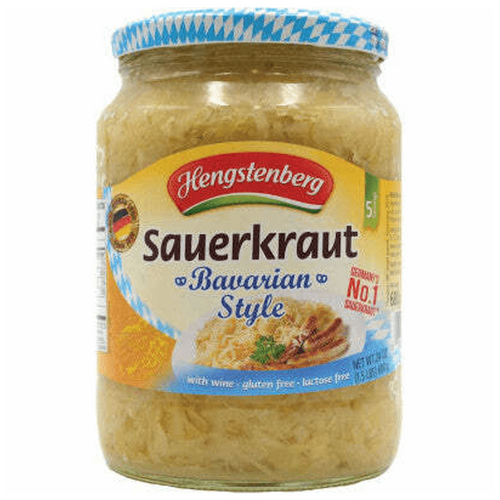
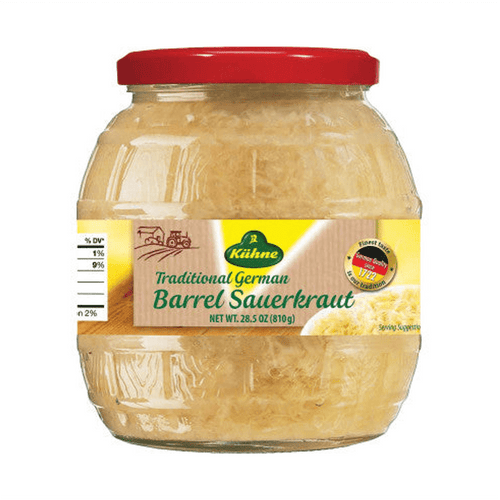
Bavarian wine sauerkraut is milder and rounder than the sharp barrel version — it is what belongs next to a sausage rather than inside a stew. Pair it with a coarse Bauernwurst or a snappy Knockwurst.

How Munich Actually Does It
Locals do not say Oktoberfest. They say Wiesn, and they go in the mornings and on weekdays, when the tents are calm enough to hear each other. Tracht — Dirndl and Lederhosen — is worn seriously rather than as costume, and worn well: a good pair of Lederhosen is inherited, not bought for a weekend.
The festival opens when the Lord Mayor taps the first barrel in the Schottenhamel tent and calls O'zapft is — it's tapped. Nothing is poured anywhere on the grounds until that moment.
Not everyone drinks beer. Spezi, the German cola-and-orange mix, is what half the table orders, and Paulaner — who run their own tent, the Winzerer Fähndl — make one of the best-known versions. In the United States the same drink is sold as Paulaner Sunset, because the Spezi name is licensed differently here. Coca-Cola's version is Mezzo Mix, and it is the one most Germans grew up on. Both sit in our German soft drinks range.
The Italian Weekend, and Everyone Else
Oktoberfest is not only Bavarian. Roughly one visitor in seven travels in from outside Germany, and certain weekends belong to certain countries. The middle weekend is known in Munich as the Italienerwochenende — the Italian weekend — when tens of thousands of Italians drive north over the Brenner Pass and fill the tents. It has happened reliably since the 1970s, and Münchners plan around it.
Australians take over one corner of the Hofbräu tent every year. The Dutch, Austrians and Swiss come in numbers too. What you actually hear at a table on the middle Saturday is four or five languages at once.
That is why the sweet stalls sell more than gingerbread. If you are putting on your own Wiesn, it is worth setting out something from the rest of Europe alongside the German food — a bowl of Italian candy or a few bars of European chocolate is closer to the real thing than an all-German table would be.
The Stalls Outside the Tents
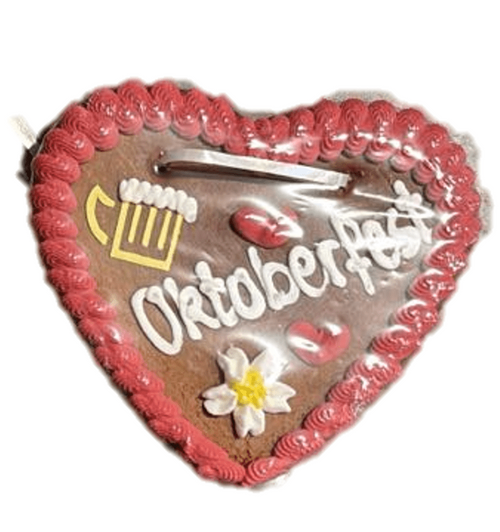
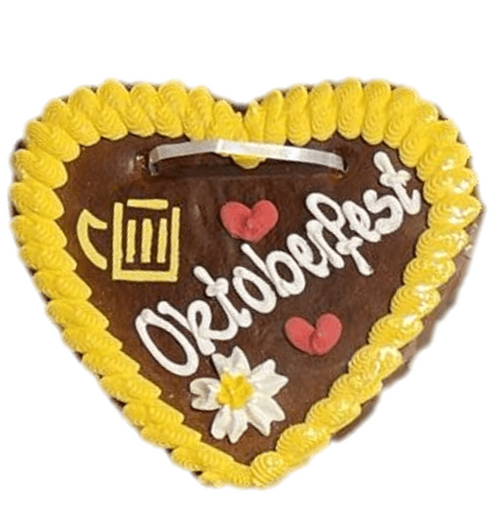
Between the beer tents run the sweet stalls, and the one everybody recognises is the Lebkuchenherz — a gingerbread heart on a ribbon, iced with a message and worn around the neck all day. They are given rather than eaten, mostly, and taken home as the souvenir of the festival. Ours come in red and yellow.
Alongside them: sugar-roasted almonds, candy floss, and the chewy Turkish honey that Germans call Türkischer Honig. If you are building a table, the hearts are what make it look like the Wiesn.
The Big Tents, Briefly
Fourteen large tents and around twenty small ones. These are the ones people mean when they name a tent.
Schottenhamel — The oldest, and where it starts — the Mayor taps the first barrel here at noon on opening Saturday. Traditionally the young crowd.
Hofbräu-Festzelt — The one international visitors head for. Loudest, most crowded, and the only tent with a standing area in front of the band.
Winzerer Fähndl — Paulaner's tent, marked by the giant rotating Maß on the roof. Around 8,000 seats and a strong local following.
Ochsenbraterei — Named for what it does — a whole ox roasted on a spit at the front of the tent, carved to order all day.
Hacker-Festzelt — Known as the Himmel der Bayern, Heaven of the Bavarians, for the painted blue sky ceiling. The best-looking tent inside.
Augustiner-Festhalle — The quietest of the big tents and the family choice. Beer still served from wooden barrels rather than steel.
What food is served at Oktoberfest?
Roast pork (Schweinebraten and Schweinshaxe), grilled sausages, roast chicken, dumplings, sauerkraut, Leberkäse, Weisswurst and Obatzda cheese spread. Pretzels and beer are the famous part, but the tents are really serving Bavarian home cooking at scale.
When is Oktoberfest 2026?
19 September to 4 October 2026, on the Theresienwiese in Munich. It is the 191st Oktoberfest. It runs mostly in September because the dates were moved earlier for better weather.
What is the most traditional Oktoberfest meal?
Schweinebraten — roast pork with dark gravy, a potato or bread dumpling and sauerkraut. It is the plate most closely associated with the tents and the one most often ordered by locals rather than visitors.
Why can't you eat Weisswurst after noon?
Weisswurst is made without preservatives and, before refrigeration, was produced fresh each morning and had to be eaten before it spoiled. The rule is no longer necessary but is still observed as tradition — Bavarians say the sausage must not hear the midday bell.
Can I make Oktoberfest food at home?
Yes, and most of it is straightforward. Roast pork, dumplings and sauerkraut need no special equipment, and sausages only need a pan. The harder part outside Germany is sourcing the right ingredients — sweet Bavarian mustard, wine sauerkraut and proper dumplings — which is what this page links to.

