
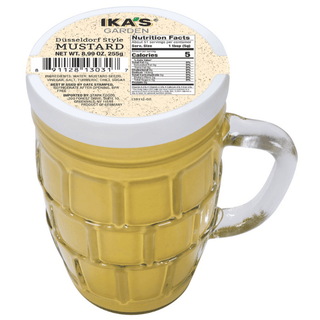
In Germany, condiments are not treated as afterthoughts. They are chosen deliberately, either to accompany a dish at the table or to add a small but important layer of flavor during cooking. Most households keep several condiments on hand, each with a specific purpose.
Condiments Germans Commonly Use
Some of the most common condiments found in German kitchens include:
- Mustard, served with sausages, cold cuts, and meat dishes, and occasionally used in sauces or dressings
- Ketchup, especially curry ketchup, which is eaten with fries, sausages, eggs, and simple meals
- Mayonnaise, commonly paired with fries, eggs, and cold dishes
- Remoulade, often served with fish, eggs, sandwiches, and cold plates
- Horseradish, used with meat, fish, and in traditional dishes that benefit from sharpness
Each of these has a place, and using the wrong one often feels off to people who grew up with these foods.
More Than a Dip
While many German condiments are served on the side and used as dips, they are also part of cooking. A spoon of mustard might go into a gravy or pan sauce. Horseradish can be mixed into sauces or served warm with meat. Ketchup and curry ketchup are sometimes used as a base for quick sauces, especially for sausage dishes.
This dual use is important. Condiments are not just toppings, but tools for adjusting flavor.
How Condiments Are Served
Condiments in Germany are usually placed on the table rather than added in the kitchen. This allows each person to decide how much to use, if any. Meals are meant to taste complete on their own, with condiments used to fine-tune rather than cover up flavors.
This approach explains why German condiments tend to be balanced rather than extreme. They are meant to work with food, not replace it.