Cookies in Germany play a very different role than cookies in the US. They are not oversized, soft, or meant to replace dessert. Instead, they are closely tied to coffee and conversation.
Most German cookies are crisp or lightly firm, with flavors built around butter, nuts, chocolate, or spices. Sweetness is intentionally restrained so the cookie supports the coffee rather than competing with it. This makes cookies something people sit down with, rather than something eaten on the go.
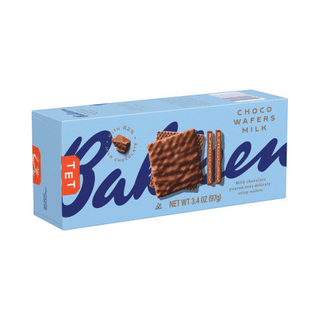
Many familiar German cookie brands reflect this approach. Bahlsen and Leibniz, for example, are known for straightforward butter and chocolate biscuits that have remained largely unchanged for decades. Lambertz is often associated with more traditional and seasonal cookies, especially around Christmas, while Manner, though Austrian, is closely tied to German cookie culture through its wafer-based products.
They come in many forms. Some cookies are everyday staples, eaten year round. Others appear mainly during specific seasons, especially Christmas, when spiced and nut-based cookies become more common. Outside of the holidays, simpler varieties dominate, often served alongside wafers on a shared plate.
Cookies are usually offered in small numbers. A few cookies with coffee are enough. This reinforces their role as a social food rather than an individual indulgence.
From the perspective of our editorial team in Germany, good cookies are defined less by novelty and more by reliability. You reach for them because you know exactly what you are getting, and that familiarity is part of their appeal.